Showing posts with label #travel. Show all posts

Tuesday, July 2, 2013

The Old House - The House of Traditional Chinese People in West Kalimantan


Come back from dusk peek at Stone Umbrella Beach I suddenly saw a unique house. An old house look distinctive shape must belong to Chinese people. Chinese people in the form of a house and surrounding area is a typical Singkawang, especially the houses of the past. Unique shape and are generally made ​​of good wood. Its uniqueness lies from the mounting wall mounted wooden cross stood. Shape and location of windows and doors are also unique and simentris as his trademark. Color of the wood is left not wearing paint and dyes, so it is still very natural.

Unfortunately I did not get to entry and look into the house because when it's empty house no owner. Perhaps the residents were out or are on the go. I share the photo here that can be enjoyed by many people.

Pulang dari mengintip senja di Pantai Batu Payung aku tiba-tiba ternampak sebuah rumah yang unik. Sebuah rumah tua yang melihat dari bentuknya yang khas pastilah kepunyaan orang Tionghoa. Rumah orang Tionghoa di daerah Singkawang dan sekitarnya memang memiliki bentuk yang khas, terutama rumah-rumah tempo dulu. Bentuknya unik dan umumnya terbuat dari kayu yang bagus. Keunikannya terletak dari pemasangan dinding katu yang dipasang secara berdiri tidak melintang. Bentuk dan letak jendela dan pintu juga unik dan simentris sebagai ciri khasnya. Warna kayu dibiarkan tidak memakai cat dan pewarna, jadi masih sangat alami.

Sayangnya aku tidak sempat masuk dan melihat ke dalam rumah karena ketika itu rumahnya dalam keadaan kosong tidak ada pemiliknya. Mungkin penghuni rumah sedang keluar atau sedang bepergian. Photo-photonya kupajang disini supaya dapat dinikmati banyak orang.


The Old House 01 - The House of Traditional Chinese People in Singkawang, West Kalimantan


The Old House 02 - The House of Traditional Chinese People in Singkawang, West Kalimantan


The Old House 03 - The House of Traditional Chinese People in Singkawang, West Kalimantan


The Old House 04 - The House of Traditional Chinese People in Singkawang, West Kalimantan


The Old House 05 - The House of Traditional Chinese People in Singkawang, West Kalimantan


Monday, April 29, 2013

Trip To Makassar Part I (06) - Statue of Rickshaw (Patung Becak)


Makassar is famous for traditional rickshaw transport. The numbers alone reached 1.500 units. Local authorities imposed a rickshaw for tourism and special operations around the tourist areas only. Rate depends on the agreement with the paddle. So famous rickshaw here, to the point chosen to be made statue. This is a photo statue of rickshaw in Anjungan Losari.

Statue of Rickshaw in Makassar (01)


Statue of Rickshaw in Makassar (02)


Trip To Makassar Part I (05) - Statue at Anjungan Losari

Anjungan Losari is one convenient place for take a walk in the city of Makassar. Many snack foods are sold here. While waiting for the sunset we could we could enjoy the food. Just have to be a bit careful of the street singers, they are a bit force. disepenjang roads here are also plenty of restaurants if you are not accustomed to eating street food. Hotels are also widely available here. In general, this place is worth a visit if you are to Makassar.

Many beautiful sculptures here. Unfortunately I do not have time to ask her who the sculptor. There are statues of people were playing Sepak Takraw, a game that comes from the people here and now worldwide and became one of the sport that competed in the world competition.

Statues Sepak Takraw Games
Statue Folk Games Sepak Takraw
The Torch Holder Statue (1)
The Torch Holder Statue (2)

Wednesday, April 17, 2013

Trip To Makassar Part I (04) - Al Mukminin Mosque Anjungan Losari

Al Mukminin Mosque is a mosque located in the Anjungan Losari, Makassar.  
This mosque is very beautiful and one of the new mosque pride of Makassar.


Monday, April 15, 2013

Trip To Makassar Part I (03) - Losari Beach


Losari Beach is located in the coastal city of Makassar is quite famous in Indonesia. Festivals and competitions are often held at this beach. Losari more accurately named Losari bay because it is curved inward. because it is a natural bay when the sea is very calm here. Do not know also if it is here in the windy season.

Many people who come to wait to enjoy the sunset here. Twilight calm amid the bustle of the city.


Sunday, April 14, 2013

Trip To Makassar Part I (02)


Walk around in Makassar city are other nuances of a city that weather is warm enough. Pour sweat profusely while walking round the streets of the city. With a friend and armed with a camera, we enjoyed the scenery there.

The people who sell food, clothing, and other merchandise. The pengamen, artisan rickshaw, taxi drivers and people who go by. Like most other thickly populated city, Makassar distinction still friendly. men look fierce, but actually they are very friendly.

Pretty much the object can be shot. Especially at Losari Beach. Many statues and monuments. Unique people. Faithful Holy Mosque which is located off the coast Losari. The golden sunset. And calm seas.

Unfortunately, Fort Rotterdam can not be shot from a distance. Greatly hinder cadger to shoot from distance. The fortress was when the object is important because there is a historical building in Makassar. So lose the spirit to take his picture.


Tuesday, April 9, 2013

Trip To Makassar Part I (01)

Makassar

From Wikipedia, the free encyclopedia
Makassar (Buginese-Makassarese) — sometimes spelled Macassar, Mangkasara — is the provincial capital of South Sulawesi, Indonesia, and the largest city on Sulawesi Island. From 1971 to 1999, the city was named Ujung Pandang, after a precolonial fort in the city, and the two names are often used interchangeably. The port city is located at 5°8′S 119°25′ECoordinates:  5°8′S 119°25′E, on the southwest coast of the island of Sulawesi, facing the Makassar Strait.

Main sights

Makassar is home to several prominent landmarks including the 16th century Dutch fort Fort Rotterdam, Trans Studio Makassar—the third largest indoor theme park in the world and the Karebosi Link—the first underground shopping center in Indonesia and the floating mosque located right on the Losari Beach.


Monday, February 18, 2013

Cap Go Meh Singkawang Festival - Part 01


As is the case for the Chinese community in Indonesia, Chinese New Year celebrations to welcome the Chinese New Year is always celebrated in the grandest tradition of all levels of Chinese society Singkawang every year. For those Chinese New Year celebrations were no different from other Indonesian society while celebrating Eid or Christmas.


 Chinese New Year traditions emerging from China, which is regarded as an expression of gratitude to God for the harvest and also hope that the next season to obtain better results. Chinese New Year is always celebrated for 15 days in a row and the 15th day of the summit called Cap Go Meh. In the tradition of Hokkien means the night of the 15th which is the peak Chinese New Year celebrations, and Cap Go Meh is celebrated in particular.


In Cap Go Meh This year will be celebrated on February 24, 2013.

If you want to be explored further, Cap Go Meh in Indonesia itself is a blend of Chinese culture and Indonesia, which is a rice cake Cap Go Meh. Lontong is authentic Indonesian food while the Cap Go Meh is a tradition born of the Lunar New Year. 

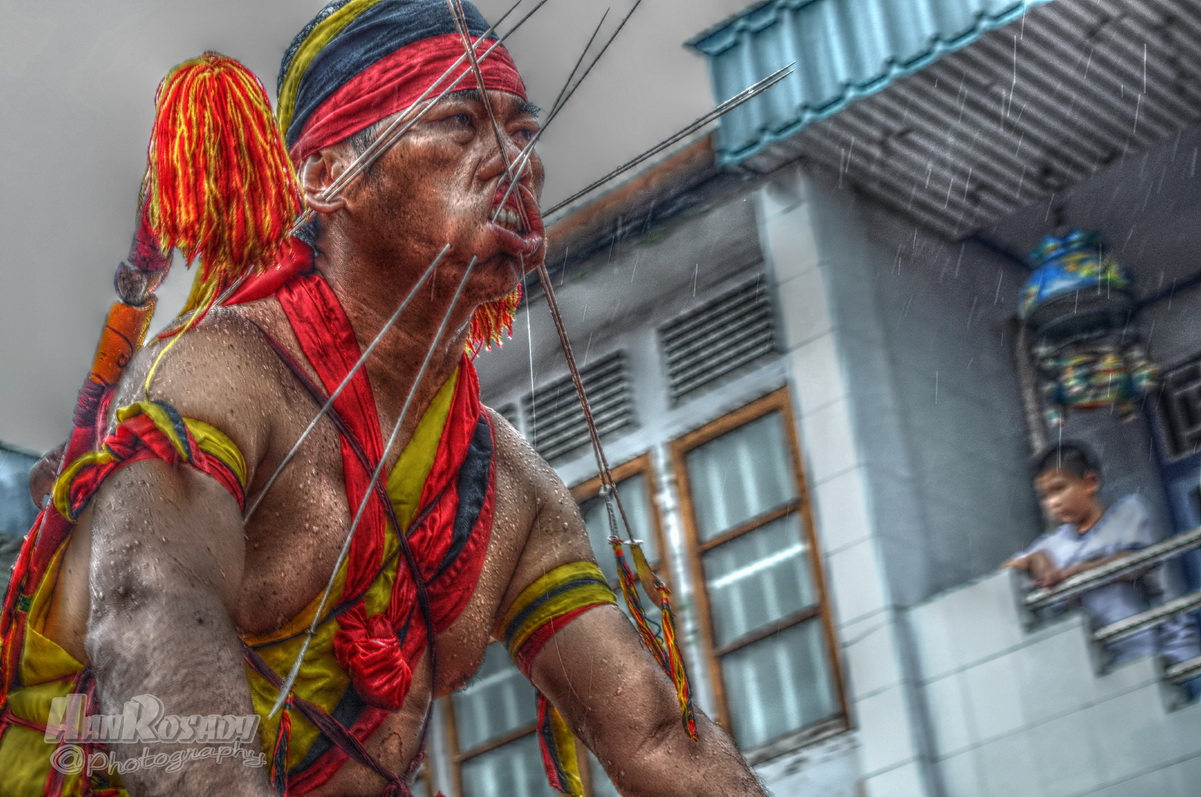
The highlight of the Chinese New Year or Cap Go Meh is meant to ward off bad luck or a disorder in the future. The expulsion of evil spirits and bad luck in the suppression of Cap Go Meh Tatung symbolized in the show. Tatung is the main medium Cap Go Meh. Places Tatung filled with mystical and thrilling, as many a man possessed, and these people are called Tatung. The ceremony was led by a pastor calling tatung who accidentally brought the spirit of a deceased person to permeate Tatung. The spirits are summoned spirits believed to be well capable of warding off evil spirits who want to disrupt the harmony of life. The spirits are summoned to dirasukkan into Tatung is believed to be the hero of a Chinese legend, such as warlords, judges, poets, princes and other saints.


In Tatung attractions that already possessed the spirit of the dead behaving strangely, some stomp or knife blade of the sword, others stick tapered steel wires up through the right cheek left cheek. Strangely the slightest Tatung's not scratched or injured.


That is why, the Cap Go Meh in different Singkawang Cap Go Meh celebrations in other places, either in Indonesia or in places other than Indonesia that still celebrate Cap Go Meh.